 Back
Back
Date:September 17, 2024
The 1984 Nobel Prize in Medicine was awarded to three scientists, Niels K. Jerne, Georges J.F. Köhler and César Milstein "for theories concerning the specificity in development and control of the immune system and the discovery of the principle for production of monoclonal antibodies."
The discovery of monoclonal antibody production revolutionized treatment for cancers, autoimmune diseases and infectious diseases. The first monoclonal antibody was approved by the United States Food and Drug Administration (US FDA) in 1986.
With this approval for use of monoclonal antibodies in humans, a new ray of hope brightened millions of lives across the world. These were the lives of patients suffering from cancer and deadly infectious diseases. With the advent of monoclonal antibodies, these lives would be saved. But this is not a universal statement.
The problem
Today, monoclonal antibody treatments are costly and available only to individuals and countries that can afford them. More than 40% of biosimilars were subject to price increases of 100% or more in recent years. Unfortunately, most patients in low-and-middle-income- countries (LMICs) and in most African nations cannot access and afford these treatments in their home countries.
Millions of lives in Africa and other LMICs continue to be lost from treatable cancers and infectious diseases despite the availability of safe and effective treatments. Even biosimilars – which are supposed to offer lower price options – are only lower in price by about 25% compared to generics, which are lower in price by up to 90%.
It makes biosimilars unaffordable to many. This was a situation that one of the co-discoverers of monoclonal antibodies, César Milstein, had cautioned about. He had warned that "science will only fulfil its promises when the benefits are equally shared by the really poor of the world."
The solution
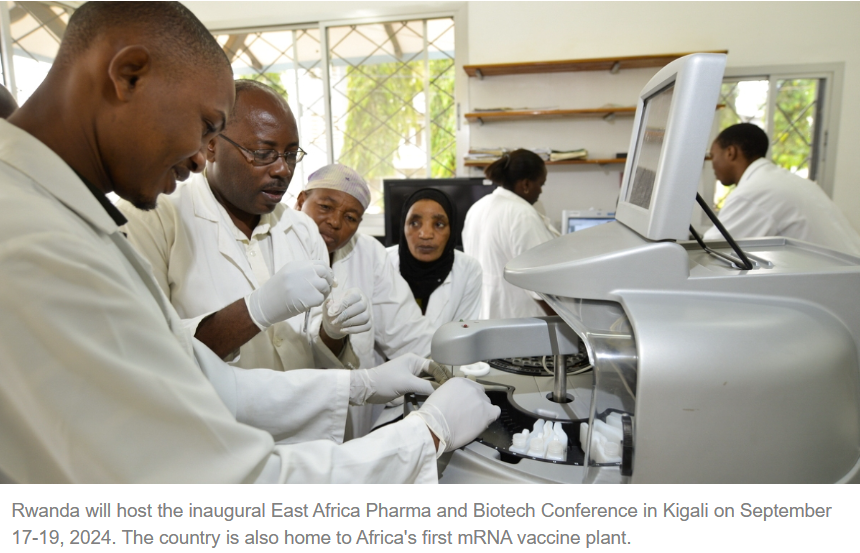
This inequity can, shall and must change. The change will come in the form of safe and effective monoclonal antibodies that are available, accessible and affordable for people living in Africa. Africans suffering from cancer and infectious diseases must have equal opportunity to life as people living in wealthy nations.
For monoclonal antibodies to be available, accessible and sustainable at low costs, three conditions must be met:
- The first condition is local production. These drugs will have to be developed in African nations and people living in these nations must have the first right to the drugs.
- The second condition is that all barriers to supply of the drugs from the manufacturing plant to the patient must be removed. The supply chain mechanism must be such that there are no cost-elevating factors in the uninterrupted supplies of monoclonal antibodies, from the manufacturing plant to the facility where the patient receives the drug.
- The third condition is that the drugs must be produced in sufficient volumes to meet demands of disease burden in African nations. For this to happen, enabling pharmaceutical regulatory processes must be put in place by African nations so that the monoclonal antibodies are reliably and consistently available for Africans while maintaining the safety and quality of the drugs that are manufactured.
Looking ahead
Safe and effective monoclonal antibodies save lives from deadly diseases like cancer and infectious diseases. With every life saved, there is hope. When disease morbidity and mortality are effectively reduced, the economic returns to the countries are manifold. These returns result from the shorter duration of hospital stays and the increase in productive life years of the populations.
Additionally, with availability of highly effective, low-cost treatments in countries, the outflow of people to other countries reduces manifold. This reduces the out-of-pocket expenses that families incur for their treatment and the resulting financial distress.
The time has come for every African to be able to afford safe, high quality and affordable sophisticated treatments like monoclonal antibodies for cancers and infectious diseases.
As Dr Richard Chin and Dr Menghis Bairu, the founders of biotechnology company Bio Usawa, often say, "When patients die because there is no cure, it is a tragedy. When patients die even when there is an effective cure because of the cost of the treatment, it is an injustice."
We must correct this injustice and ensure that every African has access to life-saving medicines like monoclonal antibodies against cancers and infectious diseases at a price that they can afford. The time is now.
Raj Shankar Ghosh, MD is a physician with 30 years of experience in public health program delivery
https://www.newtimes.co.rw/article/20169/opinions/time-is-now-africas-quest-to-become-a-global-biomedicine-hub
Bio Usawa at ADIS 2026: Connecting Science, Partnerships, and Impact
April 2026As part of Bio Usawa's engagement at the West Africa Biomanufacturing Regulation & Market Access Forum in Ghana last week, our Head of Global Regulatory…
March 2026Earlier this week, Bio Usawa participated in the West Africa Biomanufacturing Regulation & Market Access Forum in Accra, Ghana, contributing to high-lev…
March 2026